

Exploring Down Milling Process Efficiency for Round Tooth Milling Cutter
The meticulous investigation into the down milling process for a round tooth milling cutter is paramount for enhancing machining efficiency and optimizing tool performance. This study employs a sophisticated methodology, primarily focusing on the Finite Element Method (FEM) for a detailed analysis of the milling cutter’s behavior during down milling operations. The round tooth milling cutter serves as a pivotal component in metal cutting operations, and understanding its dynamics is essential for achieving superior machining outcomes. Down milling, characterized by the cutter rotating against the direction of feed, necessitates a nuanced examination to unlock its full potential in precision machining applications.
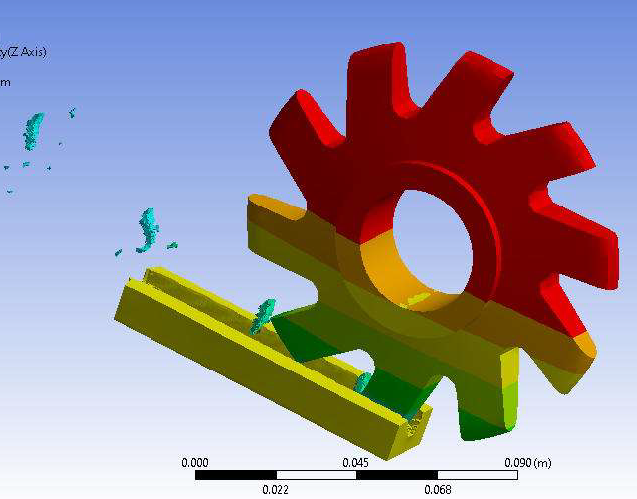
The Finite Element Method, renowned for its precision in simulating complex mechanical systems, is employed as the cornerstone of this analysis. This method allows for a comprehensive understanding of the milling cutter’s response to various parameters such as cutting forces, tool wear, and temperature distribution during the down milling process. In the realm of FEM analysis, the study delves into the intricate details of the round tooth milling cutter’s behavior. It scrutinizes the stress distribution, deformation patterns, and thermal effects, offering valuable insights into how the tool interacts with the workpiece material. This depth of analysis contributes to the optimization of tool geometry, material selection, and machining parameters for superior performance.
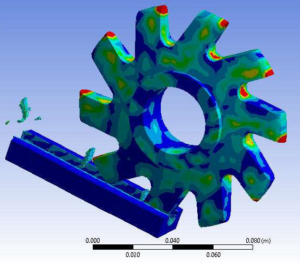
The down milling process, when analyzed through FEM, unveils critical information about the forces acting on the milling cutter. Cutting forces, an essential aspect of machining dynamics, are thoroughly examined to understand their magnitude, direction, and impact on tool life. This information becomes instrumental in predicting tool wear patterns and devising strategies to extend tool longevity.
Furthermore, temperature distribution across the milling cutter during down milling is a pivotal consideration. FEM facilitates the simulation of heat generation and dissipation, allowing for a comprehensive assessment of thermal effects. This knowledge is crucial for preventing thermal-induced tool degradation and enhancing the overall efficiency of the machining process. The integration of FEM in this study enables a dynamic exploration of the round tooth milling cutter’s response to varying cutting conditions. The analysis provides a roadmap for optimizing machining parameters, reducing tool wear, and achieving superior surface finish in down milling operations.
In conclusion, this research transcends conventional analyses by focusing on the intricate dynamics of the down milling process for a round tooth milling cutter. The emphasis on the Finite Element Method elevates the study to a level of precision that is indispensable for advancing machining capabilities. The insights gleaned from this detailed analysis pave the way for not only enhancing the tool’s performance but also contributing to the broader field of precision machining. As industries seek continuous improvement in manufacturing processes, this study offers a valuable blueprint for optimizing down milling operations through advanced FEM analysis.

